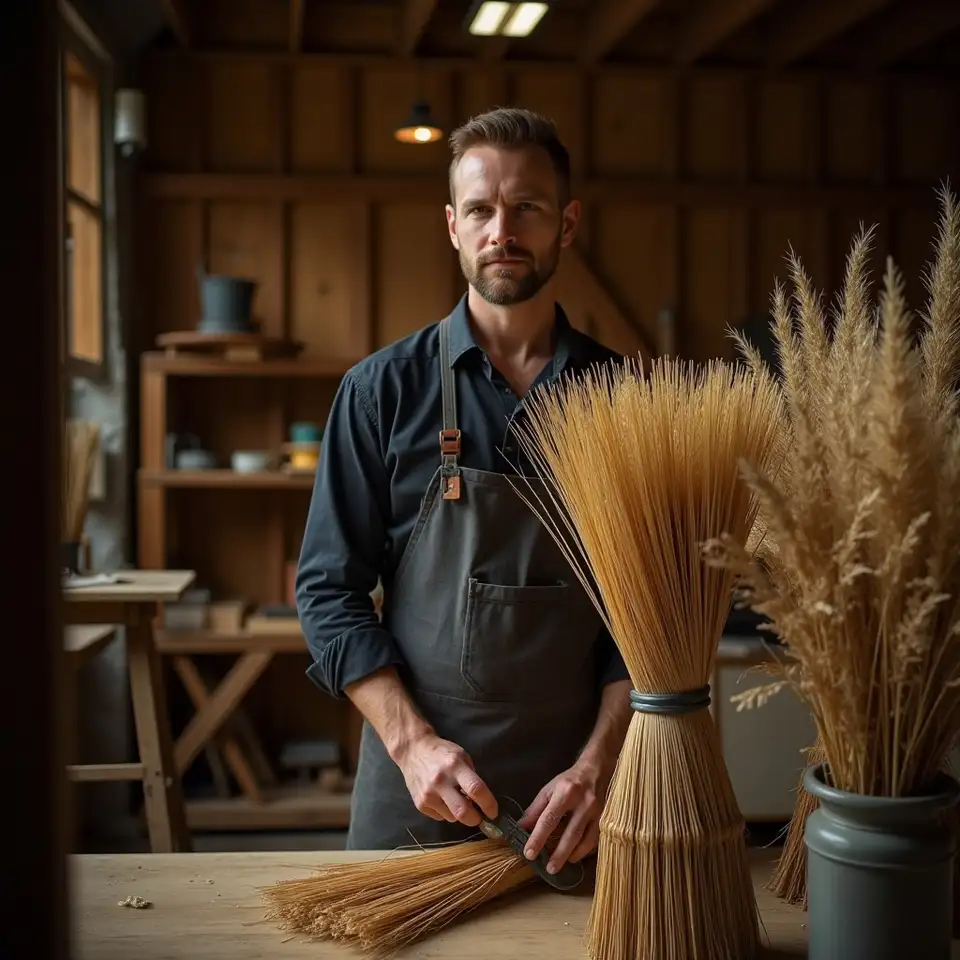
Broom corn whisk brooms shaped by hand, built to outlast the season
Each whisk begins as a stalk in the field and ends as a tool in the hand. The binding is tight. The fiber is natural. The result is a broom that sweeps well and ages honestly.

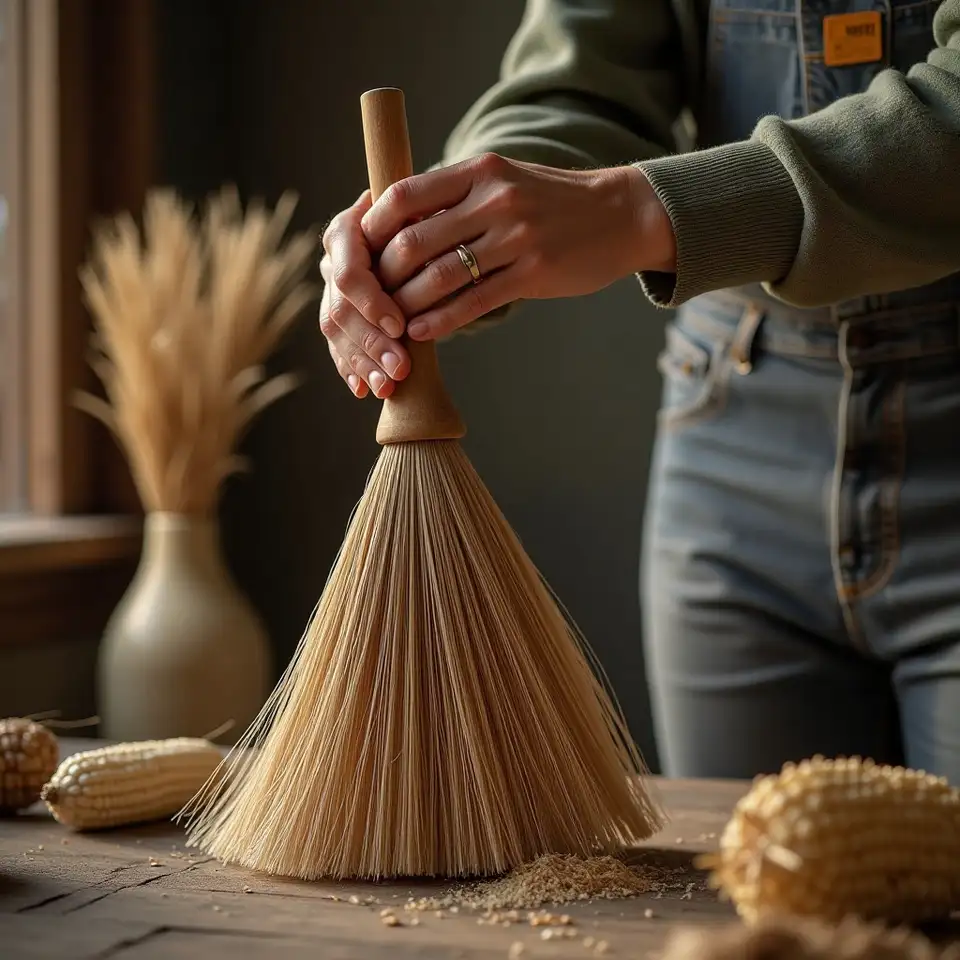
Broom corn whisk crafting is an old practice kept alive by patience, repetition, and respect for the material.
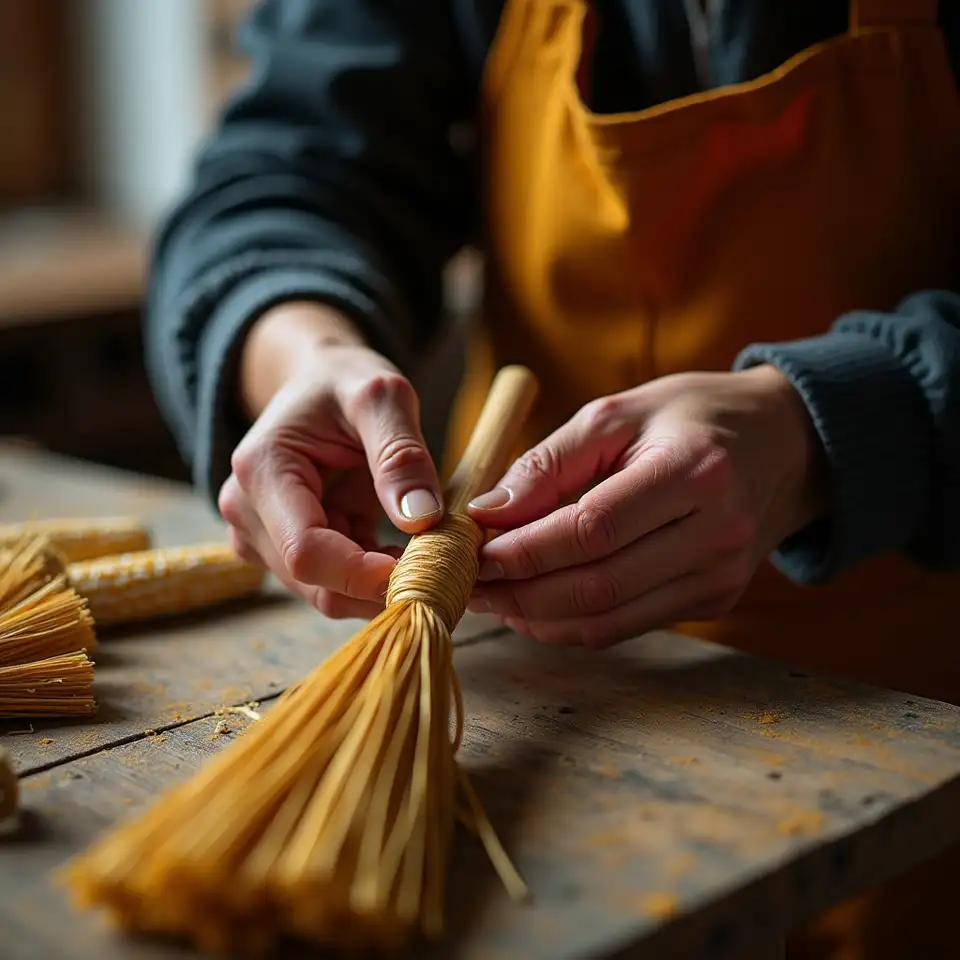
A whisk broom is only as strong as its neck wrap. The maker pulls cord tight in three stages, embedding tension into the structure so the piece holds form through years of use.
The path from field to finished piece follows six stages. Each depends on the one before. Rush the drying and the fiber cracks. Rush the binding and the neck fails.
Stalks are cut when the fiber has matured but before brittleness sets in.
Growers in Victoria and South Australia cultivate broom corn as a specialty crop. The Company selects stalks based on fiber length, color consistency, and structural integrity.
Harvest occurs in late summer. Bundles are field-dried for one week, then moved to covered racks for three to five weeks depending on humidity and air circulation.
Harvest knife, field twine, drying racks, covered storage shed with ventilation.
Selected bundles are sorted by length and briefly soaked to restore pliability.
Prepare fiber for binding without over-saturating. Wet fiber is weak. Dry fiber cracks. The balance is found by touch and timing.
Stalks are graded by brush length and thickness. Chosen bundles are submerged in cool water for twenty to forty minutes, then drained and rested.
Water trough, grading rack, drainage table, hand towel.
Fiber restored to workable pliability with internal moisture balanced for binding.
The core bundle is shaped and wrapped with waxed cord in a three-stage tightening sequence.
Waxed linen cord, binding needle, knife, clamp block for initial anchor.
The fiber fan is spread and cut to the intended profile, functional or decorative.
Achieve the correct sweep angle for working whisks or the intended silhouette for display pieces. Precision matters. Corrections are difficult after trimming.
The bound fiber is fanned and combed. Working whisks are trimmed to a uniform edge. Decorative pieces receive additional binding patterns and selective shaping.
Scissors, template card, comb, secondary cord for decorative binding.
Fiber shaped to specification with clean edges and secure decorative elements where applied.
The completed piece dries for forty-eight hours before final inspection.
Allow cord tension to settle and fiber to return to stable moisture content. Inspect for defects that would compromise function or appearance.
Failed pieces are cut apart and the fiber is reclaimed. Passing pieces are stamped and catalogued. No item ships without passing all four checks.
Hanging rack, inspection checklist, maker's stamp, reclaim bin.
A finished whisk broom or decorative sweeper that meets the studio's durability and appearance standards.
Finished pieces are photographed, described, and made available for purchase or workshop demonstration.
Connect the crafted object with the person who will use it. Accurate description prevents mismatch. Care guidance extends useful life.
Camera, natural light setup, packaging materials, care instruction card.
Accurate product representation and informed ownership that supports long-term satisfaction.
From workshop bench to hallway hook
Voices from the workshop and the wall
"The first two whisks I made fell apart within a week. The third held. That progression taught me more about patience than any instruction sheet could have. I still use it on my kitchen bench."
"I source decorative pieces for client spaces. These sweepers have a presence that factory-made items lack. The variation in fiber color means each one reads as unique. Clients notice the difference."
The Fiber